




MTSD Details K-4 Screen Use, Says Technology Is Intended to Reinforce — Not Replace — Teacher Instruction
Nicholas Mistretta
MONTGOMERY, NJ — Montgomery Township School District officials put numbers and greater definition around one of the community’s most closely watched education issues Monday night, telling parents that elementary students spend relatively limited time on individual devices and that technology in grades K-4 is intended primarily to reinforce — not replace — teacher-led instruction.
During the district’s first Superintendent Series program of the 2026-27 school year, administrators said current data show Orchard Hill Elementary School students spend less than 30 minutes per day on individual screens, while Village Elementary School students spend less than 45 minutes per day. The Nov. 9 session, titled “Growing Up Digital: K-4 Technology Usage at MTSD,” was held at Orchard Hill Elementary School and featured Superintendent Mary McLoughlin, Director of Technology Jeff Brooks, Orchard Hill Principal Dan Van Hise, Village Elementary School Principal Susan Lacy and Director of Curriculum, Instruction and Staff Development Fiona Borland. The district had advertised the hour-long program as a presentation followed by questions from families. The meeting came amid sustained community discussion over how and when technology should be used with younger students. What emerged Monday was a more detailed picture of the district’s philosophy: individual devices have a place in elementary classrooms, administrators said, but they should serve a defined instructional purpose rather than become the default method of teaching.

District: Personal Devices Used for Reinforcement
Brooks told attendees that the district had reviewed its current usage data as administrators considered questions about whether formal screen-time limits should be established. “Our current data shows that our Orchard Hill students are on their devices, on their personal screens, for less than 30 minutes a day,” Brooks said. “Our Village Elementary School students are on their screens for less than 45 minutes a day.” He drew a distinction between instruction delivered by a teacher and activities completed individually on a device. “The activities they’re on their devices for are reinforcement activities,” Brooks said. “No activity is an instructional activity. Our instructional activity is led by our teachers.” Officials offered several examples of how that can work in practice. In science, a resource such as Mystery Science might include a short video illustrating something that would be difficult to reproduce in a classroom. A teacher could stop the video, ask students what they observed and then move into discussion or a hands-on activity. In social studies, students researching regions of New Jersey might gather information collaboratively and then choose how to present what they learned, potentially using a slideshow, but also having the option of creating a traditional poster. The emphasis, administrators said, is on the learning objective rather than the device itself.



Shared Screens Viewed Differently From Individual Device Time
District officials also distinguished individual student screen use from classroom displays such as BrightLink interactive boards. Administrators described those larger displays as, in effect, a modern version of the classroom chalkboard and discussed research differentiating passive viewing from co-viewing. Passive viewing — a video simply playing in the background — was contrasted with a teacher intentionally using a short piece of digital content, stopping it and engaging students in questions, observations and conversation. District officials said that kind of guided use can function much like a teacher sharing a picture book: the screen becomes a tool around which interaction takes place rather than something students simply watch. The distinction became an important theme of the evening. The question, officials repeatedly suggested, is not simply whether a screen is present, but why it is being used and what students and teachers are doing with it.



Brooks: District Deliberately Rejected Elementary Take-Home Devices
One of the clearest statements of the evening concerned a decision the district made following the COVID-19 pandemic. Brooks told parents that Montgomery deliberately chose not to adopt a 1:1 take-home device model for its elementary students. “We, post-COVID, made a choice to not be a district that sent our elementary kids home with one-to-one devices,” Brooks said. “We purposefully made that choice. We stand by that choice.” Instead, devices are kept in carts in elementary classrooms and are available when teachers determine they are appropriate for an activity. “We did not create this model where the students were taking the technology home at the elementary levels,” Brooks said. The district begins its take-home device model in fifth grade, he said. Brooks noted that some of the broader national debate over school screen time has centered on districts that invested heavily in 1:1 elementary devices and subsequently built instructional systems around sending them home. Montgomery, he said, never made that transition.
Real Books Remain Part of Daily Instruction
Administrators also stressed that the presence of digital reading tools does not mean physical books have disappeared from elementary classrooms. Officials said teachers continue to conduct daily read-alouds using physical books, describing that time as an opportunity for teacher modeling, conversation and relationship-building. Digital adaptive reading programs can serve a different purpose. Administrators said those programs can be especially useful for students who are struggling readers because material can be adjusted to a student’s level without visibly separating that child from classmates working on similar content. That, officials said, can help reduce the stigma a child might feel when struggling with reading while providing teachers with information about the student’s progress. But district leaders emphasized that those programs supplement rather than replace traditional reading experiences. Students continue to take physical books home, officials said, and digital reading libraries are offered as additional options rather than mandatory nightly assignments.
Videos During Snack and Other Non-Instructional Times Not Banned
The district also addressed an issue that has generated particular interest among some elementary parents: videos shown during snack, dismissal, brain breaks and other non-instructional periods. Administrators acknowledged that the district has not imposed a blanket prohibition on videos during those times. Instead, teachers have been asked to make what officials called “mindful teacher choices with purpose.” “We have not said collectively, ‘You can’t show videos during these non-instructional times,’” Van Hise explained. “But what we have said is you have to know your why, know your rationale, and think about how often you’re doing it.” For example, a teacher might use snack time to show a short video extending something students had been studying but did not have time to complete during the instructional block. Background music may also be used while students eat and socialize. He said that when digital read-alouds or similar content are used, teachers have been encouraged to connect them back to classroom instruction and, when possible, create a co-viewing experience rather than simply allowing a video to run passively.


Parent Question Prompts Promise to Investigate Homework Practice
The question-and-answer period also illustrated why administrators said the issue cannot easily be reduced to one district-wide rule. One parent described an experience in which a third-grade student had math work involving a computer at home. The account appeared to surprise district officials. Borland said the practice described did not sound consistent with the district’s usual elementary homework expectations and pledged to look into it. “I will investigate,” the administrator said. “I will 100 percent investigate that.” Officials said third-grade homework guidance calls for approximately 30 minutes, traditionally including about 20 minutes of reading and 10 minutes of math fact or concept practice. They stressed that online resources discussed during the presentation are generally options, not requirements that children spend a prescribed amount of time online each evening. The exchange highlighted one of the challenges surrounding the issue: district-wide expectations may not always match every individual experience reported by a family.
Digital Resources Available — But Not Mandatory
For parents who do want their children to use digital resources outside school, administrators outlined several options. The district uses Clever, a digital dashboard that places approved student applications in one location. Officials also pointed parents toward media-center websites containing curated research tools and age-appropriate resources rather than open-ended internet searching. Programs discussed during the evening included Freckle, MathFactLab, myON, Raz-Kids, Lalilo, Reading Playground, PebbleGo, BrainPOP Jr and National Geographic Kids. Officials described the resources as tools families may choose based on their child’s interests and learning needs. They were equally clear, however, that elementary students are not expected to spend a set amount of time each night using them. “They’re not mandatory or requirements that a kid needs to be on these for 30 minutes a night or anything like that,” one administrator said. “They’re just options.” The district also cautioned parents that even educational digital libraries should be used purposefully. With large numbers of books immediately available, a child can easily jump from one selection to another rather than having the sustained reading experience that comes naturally with a physical book.

Data Privacy Enters the Discussion
Technology use also prompted questions extending beyond screen time. One parent asked where student and teacher data generated through educational programs are stored and how that information is protected. Brooks said data associated with platforms such as Freckle and Google are housed on vendor servers and that the district relies on data privacy agreements and vendors’ compliance with federal child-privacy requirements, including COPPA. Officials said those agreements include provisions concerning data security and deletion. The discussion underscored that decisions about educational technology involve more than minutes spent looking at a screen. They also raise questions about student information, software vendors and the algorithms used by adaptive learning programs.
The ‘Five C’s’ and a Question of Purpose
McLoughlin concluded the prepared presentation by discussing guidance built around what they described as the American Academy of Pediatrics’ “Five C’s” for thinking about children and digital media: Child, Content, Calm, Crowding Out and Communication. The framework asks families to consider the individual child and the content being consumed; whether media is being used primarily to calm a child; what other activities digital media may be displacing; and how families are communicating about media use. That concept closely mirrored the larger message district officials presented throughout the evening. Technology, they argued, should have a purpose. A short science video that allows students to observe a process they cannot reproduce in the classroom is different from passive entertainment. An adaptive reading program targeted to a student’s needs serves a different function from replacing a teacher-led read-aloud. A classroom display used for discussion is different from a child independently spending time on a personal device. For parents who have been asking Montgomery to take a harder look at screen use, Monday’s meeting provided considerably more information about what the district says is happening inside its K-4 classrooms. It also showed that the conversation is not finished. Questions remain about consistency from classroom to classroom, technology during non-instructional periods, homework practices and how individual experiences align with district-wide expectations. But the district put several clear positions on the record Monday: Elementary students are not sent home with district devices. Individual screen time is currently reported at less than 30 minutes daily at Orchard Hill and less than 45 minutes at Village. Physical books, handwriting, hands-on activities and teacher-led instruction remain part of the elementary program.
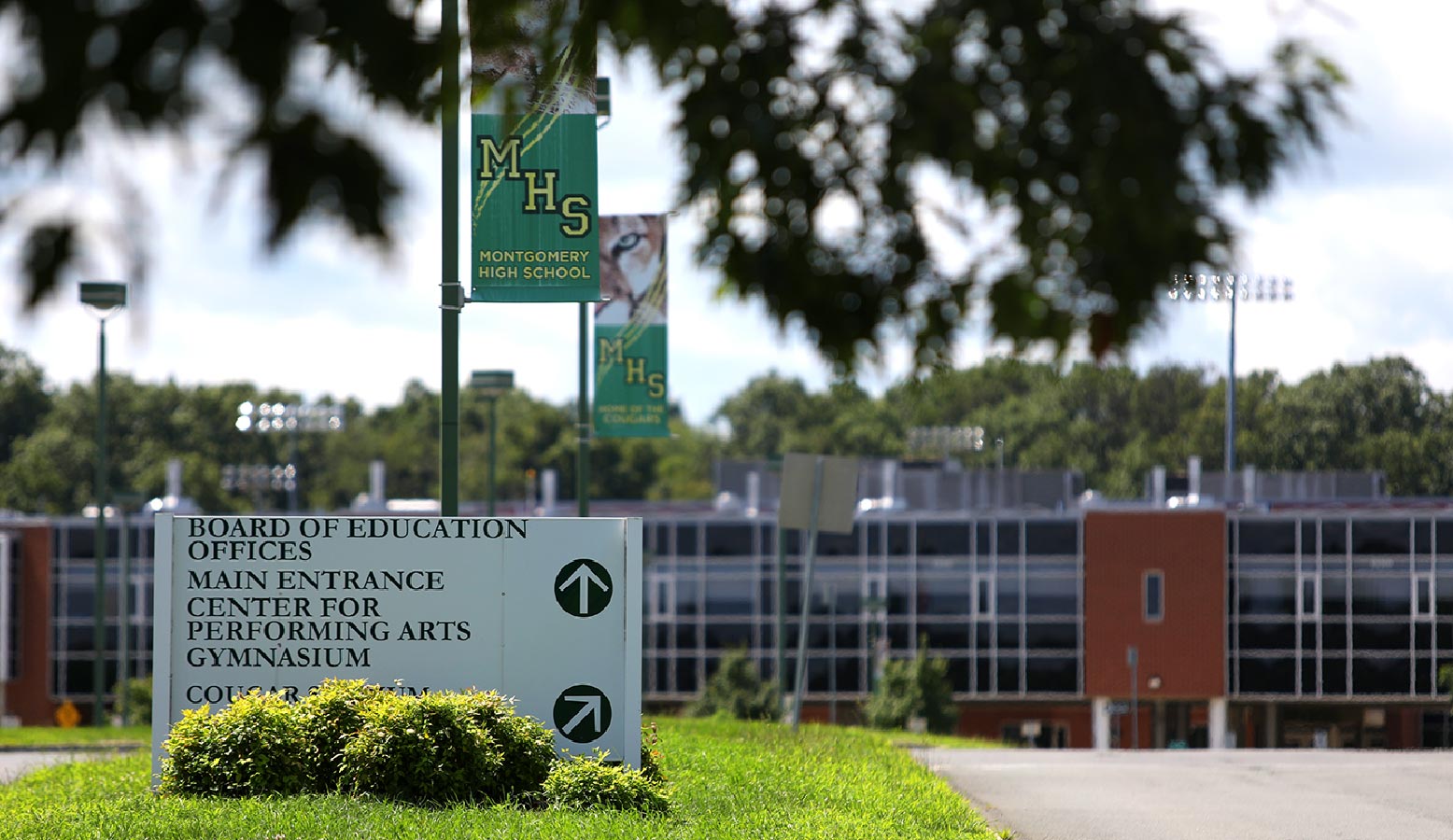
Photo by: Nicholas Mistretta/headlinenewsmontgomery.com