



Montgomery Veterans Day Ceremony Honors Service, Sacrifice and the Bonds That Endure
Nicholas Mistretta
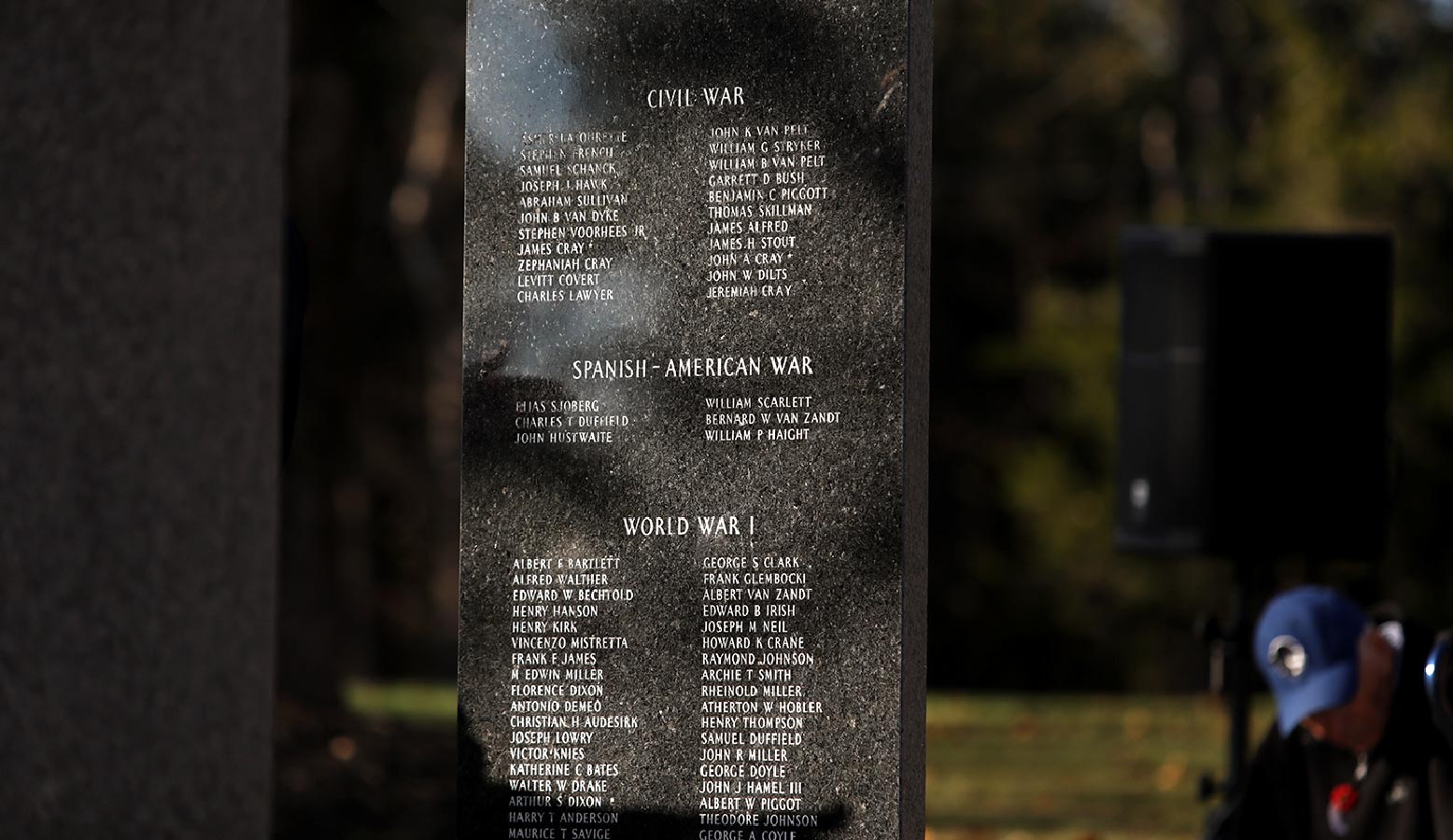
MONTGOMERY, NJ — Stories of service, sacrifice, family and an enduring bond among those who have worn the uniform took center stage Sunday as Montgomery Township gathered at its Veterans Memorial to honor the men and women who have served in the United States Armed Forces.
The annual Veterans Day ceremony brought together veterans, township officials, students, Scouts, historians and residents for an observance that looked not only at military service itself, but at the relationships, responsibilities and legacy that continue long after a service member returns home. The ceremony was led by Dimitra Bairaktaris, chair of the Montgomery Township Veterans Memorial Committee and a U.S. Army veteran, who served as master of ceremonies. MVMC Vice Chair Dale Weingart, along with fellow committee members, also played an important role in the committee’s continuing work to honor Montgomery’s veterans, preserve their stories and carry those traditions forward within the community. Scout Troop 850 presented the colors, accompanied by the 6th New Hampshire Volunteers, before Montgomery High School sophomore Alexandra Winer sang a stirring rendition of the National Anthem. The invocation was delivered by V. Rev. Nektarios Cottros, presiding priest of St. George Greek Orthodox Church in Piscataway and himself a veteran.



Singh: Freedom Is Present in the Ordinary Moments of Life
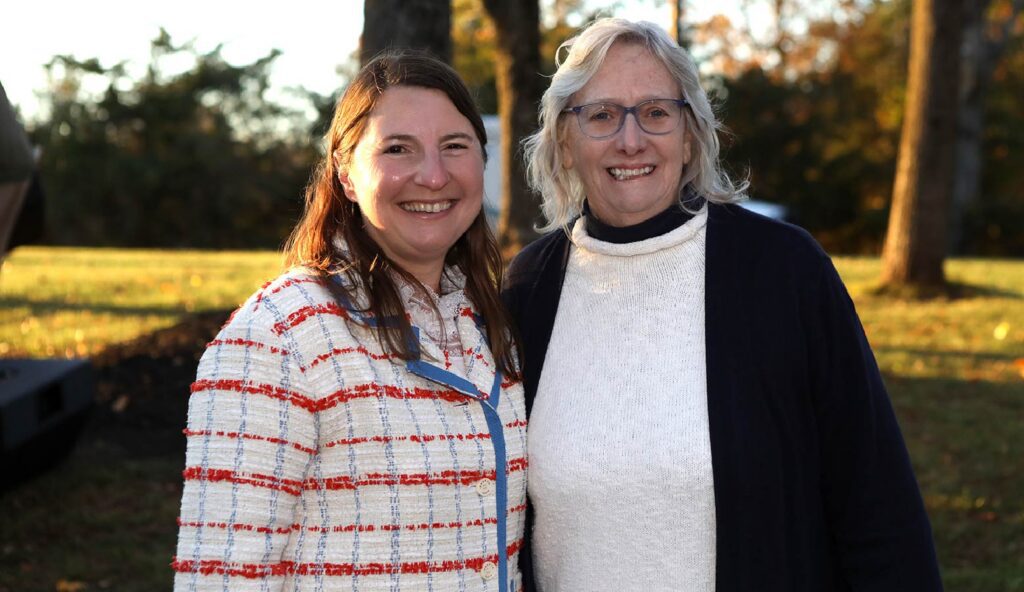
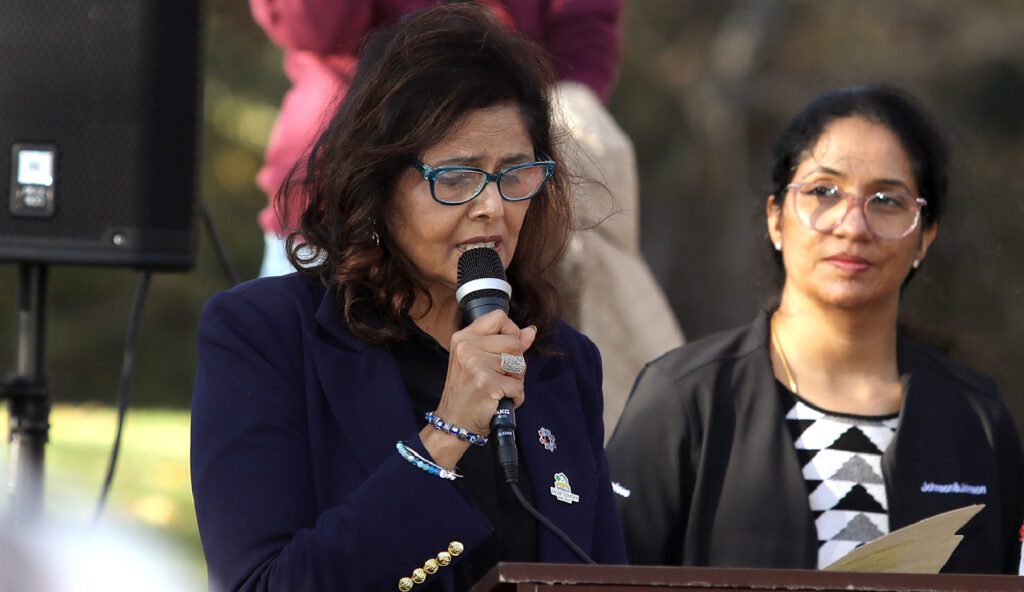
Mayor Neena Singh opened the ceremony by thanking the Veterans Memorial Committee for its work preserving the stories and legacies of Montgomery veterans and recognizing not only those who served, but the families who shared in their sacrifices. “Service is never carried by one person alone,” Singh said. “It is shared by parents, spouses, children, and loved ones who also sacrifice, often quietly and without recognition.” Singh reflected on the freedoms Americans experience every day — children attending school, teachers entering classrooms, businesses opening their doors and families gathering together — describing those seemingly ordinary moments as privileges made possible by generations who served. “These moments may seem ordinary,” Singh said. “But they are extraordinary privileges.” For Singh, the message was also personal. She spoke of her father-in-law’s service during World War II and said the sacrifices of military members helped make possible the life she has experienced as a naturalized American citizen and now as mayor of Montgomery. “Someone, somewhere, stood watch so that we could live in peace,” Singh said. She urged residents to remember that honoring veterans extends beyond a ceremony or a single day. “We honor them when we teach our children about the meaning of service,” Singh said. “We honor them when we listen to their stories. We honor them when we support veterans and their families. We honor them when we treat one another with dignity, respect, and compassion.” Singh later led the recognition of veterans in attendance, giving those present an opportunity to identify themselves, their branch of service and their years and areas of service.

Ahn Reflects on Love of Country — and the Brotherhood He Found
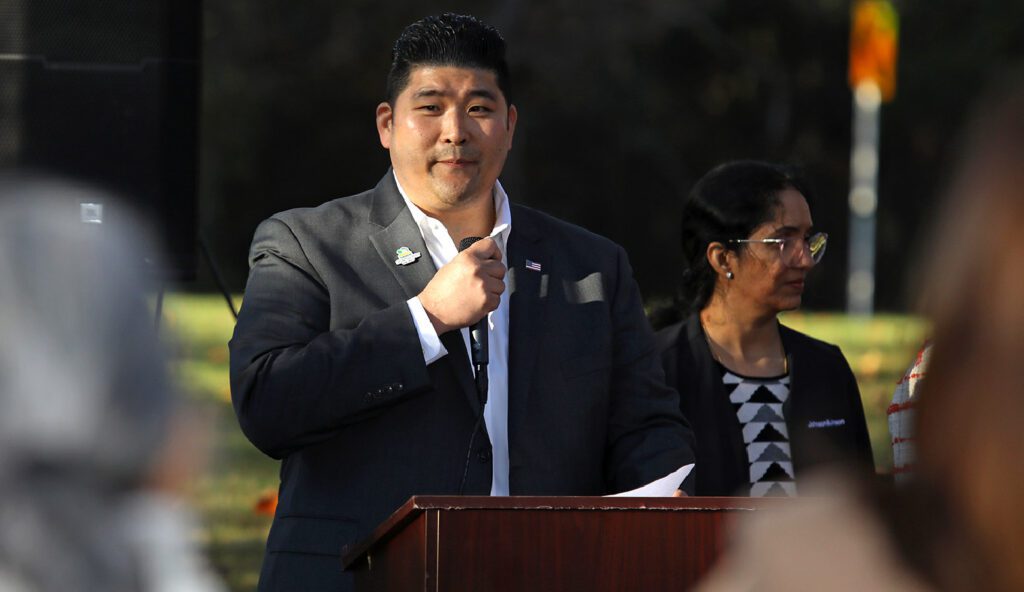
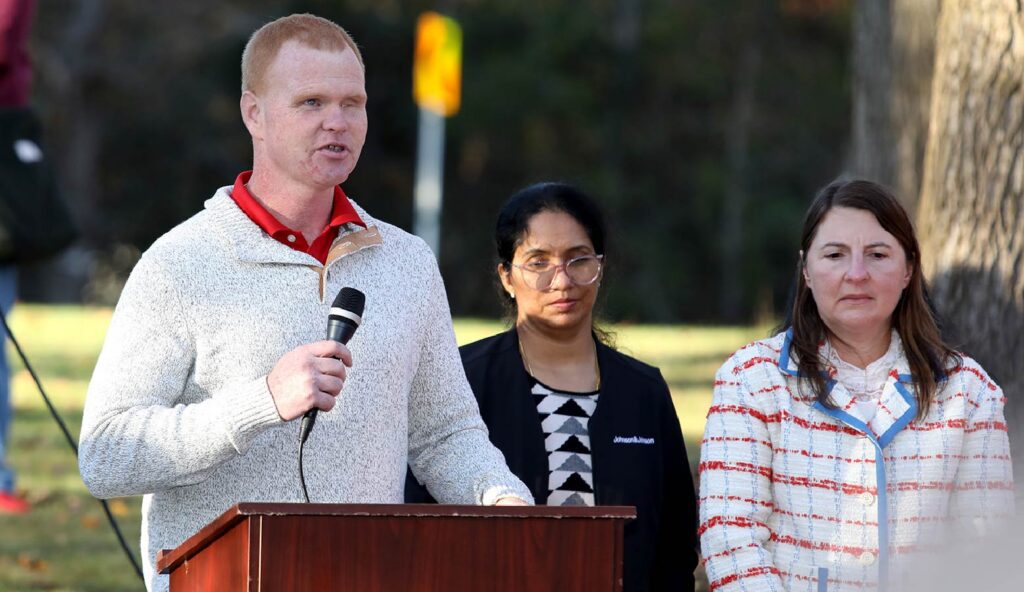
Montgomery Township Committeeman Dennis Ahn, himself an Army veteran, offered one of the afternoon’s most personal reflections as he prepared to introduce guest speaker Tim Fallon. Ahn said his decision to enlist began with something straightforward: a love of country. Raised by grandparents who survived the Korean War, Ahn grew up hearing their stories. His grandfather served in the South Korean Navy, and Ahn said their experiences shaped his understanding of freedom, sacrifice and opportunity. “Those stories stayed with me,” Ahn said. “They gave me a deep appreciation for our country and for the freedoms we sometimes take for granted.” Although his grandparents were immigrants, Ahn said, “they bled red, white and blue.” “They understood what it meant to fight for freedom, what it meant to sacrifice, and what it meant to have the opportunity to build a better life,” he said. That history eventually helped lead Ahn to enlist in the Army. But military service, he said, introduced him to something he had not fully anticipated, brotherhood. “The bond you build with your squad, your platoon, and your company is almost impossible to put into words,” Ahn said. That connection, he explained, goes well beyond wearing the same uniform. “It’s about the sacrifices you make for one another,” Ahn said. “It’s about knowing that someone has your back, and knowing that you would do the same for them without hesitation.” Ahn said those experiences form relationships that can last a lifetime, transcending branch, rank and uniform. “It’s a connection built on shared experiences, sacrifice, trust, and an unconditional love for our brothers and sisters who have served,” he said. It was a fitting introduction to Fallon, whose remarks would explore much the same bond from the perspective of a Marine and combat veteran.



Fallon Shares the Meaning of the Marine Corps Family
Tim Fallon, a Montgomery resident and combat-injured United States Marine Corps veteran, served as the ceremony’s featured speaker. Fallon graduated from Saint Joseph’s University in 2008 before joining the Marine Corps as an infantry officer. He was assigned to the 2nd Battalion, 9th Marine Regiment and deployed to Afghanistan as a platoon commander. He medically retired from the Marine Corps in 2013 and has since continued his professional career in defense and intelligence strategy, business continuity and risk management. Today, Fallon lives in Montgomery with his wife, Sarah, and their three children, Jacob, Samantha and Amelia. Rather than focusing only on military operations or formal definitions of service, Fallon gave those gathered an insight into the deeply personal relationships forged among Marines. Through stories from his own experiences, he described the military “family” created among those who serve together — relationships shaped by shared hardship, responsibility, trust and an understanding that can be difficult to fully explain to someone who has never experienced it. His stories complemented Ahn’s reflections on brotherhood, offering those in attendance a glimpse into why the bonds formed during military service often endure long after the uniform comes off.

Connecting Montgomery Students With Veterans of the Past
The ceremony also placed significant emphasis on ensuring that the stories of Montgomery veterans are carried forward to another generation. That effort has become an important part of the mission of the Montgomery Township Veterans Memorial Committee, particularly through its partnership with Montgomery’s Lower Middle School. This year, veterans visited LMS and challenged students to complete a “mission”: write a letter to a veteran. With the nation approaching its 250th anniversary, however, the project took on a historical dimension. Students were asked to write specifically to a Montgomery veteran of the Revolutionary War. The effort brought together the Veterans Memorial Committee, LMS and the Van Harlingen Historical Society. Historian Candy Willis conducted extensive research to identify, verify and document Montgomery residents who served during the Revolutionary War, including veterans whose names are not currently inscribed on the township memorial. Willis provided biographies and historical resources that students could use to understand the veterans they were writing about. She and Jim Irish, president of the Van Harlingen Historical Society, also assisted the Veterans Memorial Committee in reviewing and selecting student letters.


LMS Vice Principal Scott Pachuta has also been instrumental in the school’s continuing involvement with the Veterans Memorial Committee and the student letter-writing mission, helping create a connection between Montgomery students and the veterans whose stories they are being asked to preserve. Students whose letters were selected read their work during Sunday’s ceremony. The students were then presented with a special historical military-style patch depicting soldiers from the Revolutionary War through the present day — a symbolic connection between the veterans they studied and generations of Americans who followed them in service. The ceremony later continued that historical connection as Scouts from Troop 46 read aloud the names of Montgomery Township’s Revolutionary War veterans. Bairaktaris specifically recognized Willis and Irish for making that portion of the ceremony possible through their historical research and preservation efforts.



Maloney: ‘Be Where Your Feet Are’
Marine Corps veteran Mike Maloney, of Rolling Thunder, then offered a reflection built around a simple phrase: “Feet First. Be where your feet are.” Maloney asked those gathered to think literally about the ground beneath them — and then to consider what that ground represents. “Being where your feet are means being present,” Maloney said. “Understanding where you are, what you’re doing, and what matters at that very moment.” From there, he expanded the idea into what he called “the feat of being well-grounded Americans.” Standing at Montgomery’s Veterans Memorial during the nation’s 250th anniversary era, Maloney asked the audience to think about the generations who stood on American soil before them and the sacrifices made to preserve what that ground represents. He invoked General Richard Montgomery, the township’s namesake, noting that Montgomery was killed at the Battle of Quebec on Dec. 31, 1775 — before the Declaration of Independence was signed. “He fought for a flag yet to fly, a nation yet to be established, and a people still defining what it meant to be American,” Maloney said. The ground beneath Americans’ feet, he said, represents more than a physical place. “It represents our home. Our country. Our freedom. Our opportunity,” Maloney said. “It represents something generations of Americans have been willing to defend.” Maloney also asked those in attendance to think about veterans whose relationship with that ground was forever changed by their service — including those who lost limbs, sustained life-altering injuries or returned home facing challenges that may not always be visible. “Their sacrifices are not always visible,” he said.

For Maloney, even the ordinary ability to stand, walk and take another step can serve as a reminder of what others have given. His message then turned toward the future. “We are not standing at a finish line,” Maloney said. “We are standing on a path.” That path, he said, was established by generations before us and now carries with it a responsibility to those who follow. Maloney drew one of the afternoon’s most vivid comparisons from something millions of Americans do every morning. “Somewhere, an American servicemember is putting on their boots,” he said. “They put on their boots so that we can put on our shoes.” So Americans can go to work, attend school, raise families, pursue dreams and return at the end of the day to the comfort of their homes. “That is freedom,” Maloney said. “That is worth remembering. That is worth thanking our veterans for.” He directed part of his message specifically toward the young people in attendance, asking them to think about where their own shoes would carry them. “A well-grounded young American knows where their shoes have been, appreciates where they are today, and thinks about where they’re going tomorrow,” Maloney said. And with a touch of humor, he told the students that if it sounded like homework, it was. “You’ve already earned an A for being here this afternoon,” he said. “We want you to keep that A — as an American.” Maloney closed by returning to the words with which he began. “Feet first. Be where your feet are,” he said. “We inherit the ground beneath our feet, but we are responsible for what happens on it next.” And ultimately, he said, being a well-grounded American is not simply about where a person stands. “It is about what we stand for.”
A Ceremony Built Around Remembrance
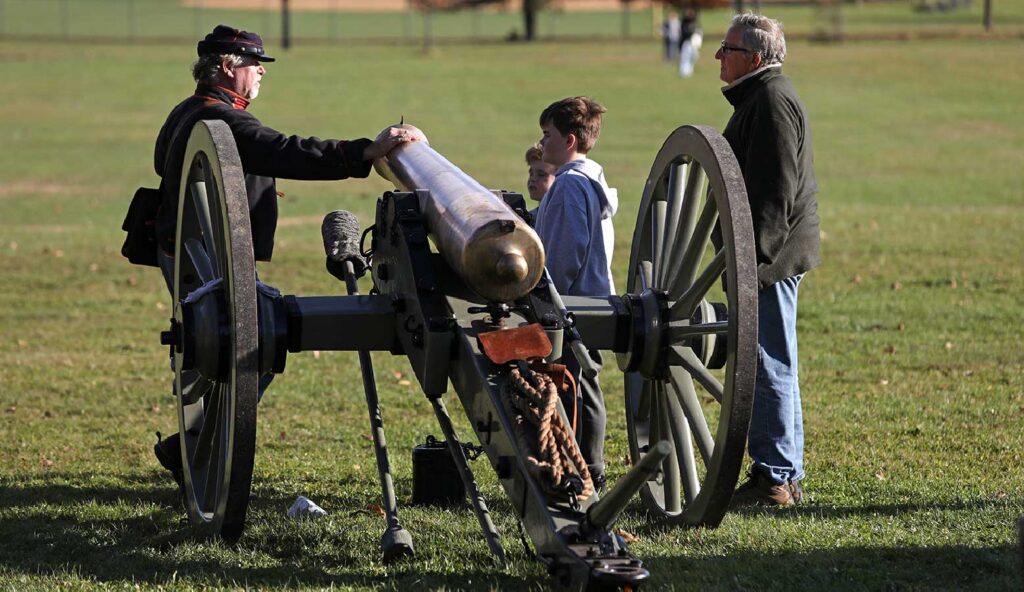
The afternoon ultimately returned to remembrance. Following a benediction from Father Cottros, those assembled observed a moment of silence. The 6th New Hampshire Volunteers then conducted a three-volley rifle salute, followed by the playing of Taps. The ceremony concluded with the firing of a cannon by the 6th New York Independent Battery, bringing to a close an observance that stretched across generations — from Montgomery residents who served during the Revolutionary War to veterans and military families living in the community today. Throughout the afternoon, several messages repeatedly intersected. Ahn spoke of brotherhood. Fallon spoke of the military family forged through shared experience. Maloney spoke of the ground inherited from those who came before and the responsibility to carry their work forward. The student letter project connected young Montgomery residents with veterans who served nearly 250 years ago.
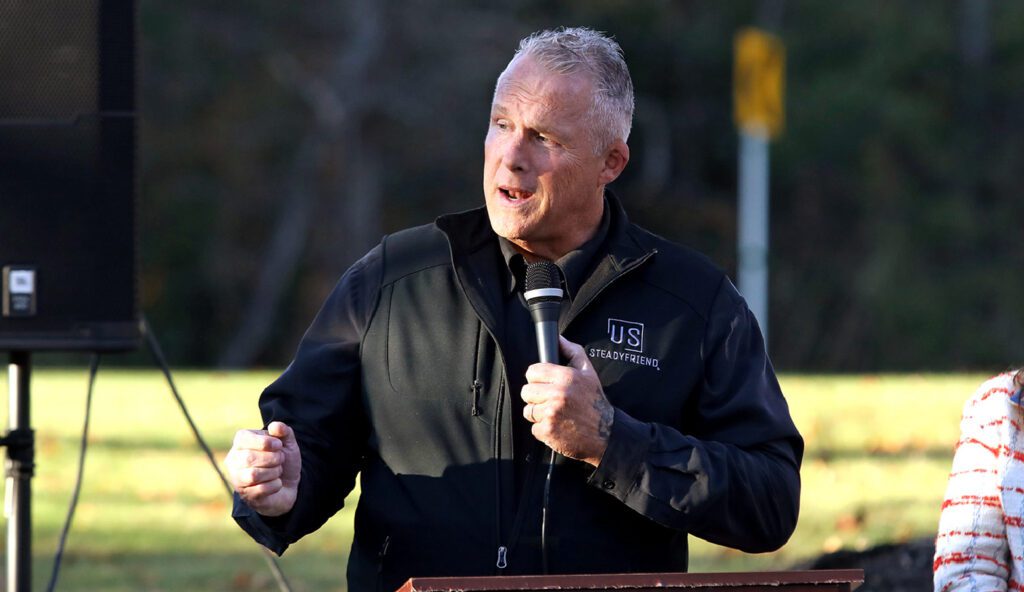
And behind those public moments was the continuing work of Bairaktaris, Weingart and the Montgomery Township Veterans Memorial Committee, whose efforts help ensure that Montgomery’s veterans, their sacrifices and their stories remain part of the community’s collective memory.
Singh reminded the community that honoring veterans cannot be confined to a single ceremony or date on the calendar. Military service may belong to an individual, but its impact rarely does. It reaches families. It creates lifelong bonds among those who serve. It shapes communities. And its stories must be deliberately passed from one generation to the next if they are to endure. “We may never be able to repay the debt we owe those who have defended our freedom,” Singh said. “But we can make sure that we never forget it.”
Photo by: Nicholas Mistretta/headlinenewsmontgomery.com