





Montgomery BOE Approves 2026-27 Budget After Lengthy Hearing, Debate Over Costs and Staffing
Nicholas Mistretta
Board adopts spending plan with 6.37% tax levy increase after presentation by Business Administrator Andrew Italiano, public comment and extended discussion over healthcare, enrollment and staffing transparency
The Montgomery Township Board of Education approved the district’s 2026-27 budget Tuesday night following a lengthy public hearing that centered on rising healthcare costs, enrollment changes, staffing reductions and the balance between maintaining academic programs and limiting the tax burden on residents.
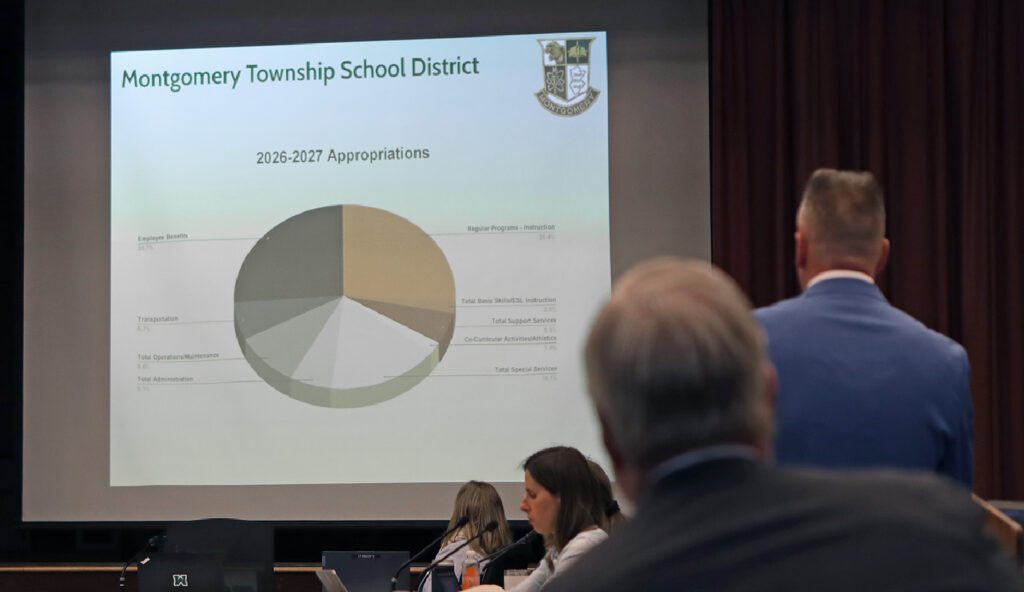



Presenting the budget, Business Administrator Andrew Italiano said the plan had remained unchanged since its introduction in March and was shaped over roughly six months. He said the administration’s aim was to protect classroom programs and extracurricular offerings despite what he described as major fixed-cost pressures, including salary increases above 3 percent in many cases, a roughly 17 percent increase in healthcare costs, and higher gas and electric rates. He said the district avoided adding new activity fees for families and instead absorbed those pressures through reductions elsewhere in the budget.
Superintendent Mary McLoughlin and Italiano framed the spending plan around district priorities including student experience, communication and community engagement, and climate and culture. In outlining what administrators said they were trying to preserve, they pointed to Montgomery’s academic and extracurricular offerings, including more than 20 Advanced Placement courses, existing and planned concurrent-enrollment classes, unified programming, STEM instruction, arts programming and supports for diverse learners. Administrators said the district had worked to maintain that range of offerings despite budget pressure.



Italiano said the proposed tax levy totals about $97.4 million, which he described as a 6.37 percent local tax increase. He said the board used both a healthcare adjustment and expiring banked cap authority in calculating the levy. He also said the total budget increase is 5 percent, in part because district debt is declining, and noted that about 82 percent of the budget is tied to salaries and benefits.
Healthcare costs emerged as a central theme of the presentation and the subsequent board discussion. Italiano said Montgomery’s roughly 17 percent healthcare increase was close to the regional average, which he placed at about 16.5 percent based on neighboring districts’ public presentations. He also contrasted the district’s renewal with the state health plan, which he said had risen far more sharply, and told board members the district is exploring ways to reduce future prescription costs through changes in delivery methods without reducing employees’ level of care.

Administrators also pointed to enrollment changes in explaining the budget’s staffing decisions. Italiano said the district expects enrollment to decline by about 2.9 percent next year and said that trend, combined with higher fixed costs, forced difficult choices. He said the district removed $2.4 million in facility and equipment requests, $1.4 million in salaries, $440,000 in supplies and $100,000 in professional development from initial requests in order to balance the budget while preserving programs.
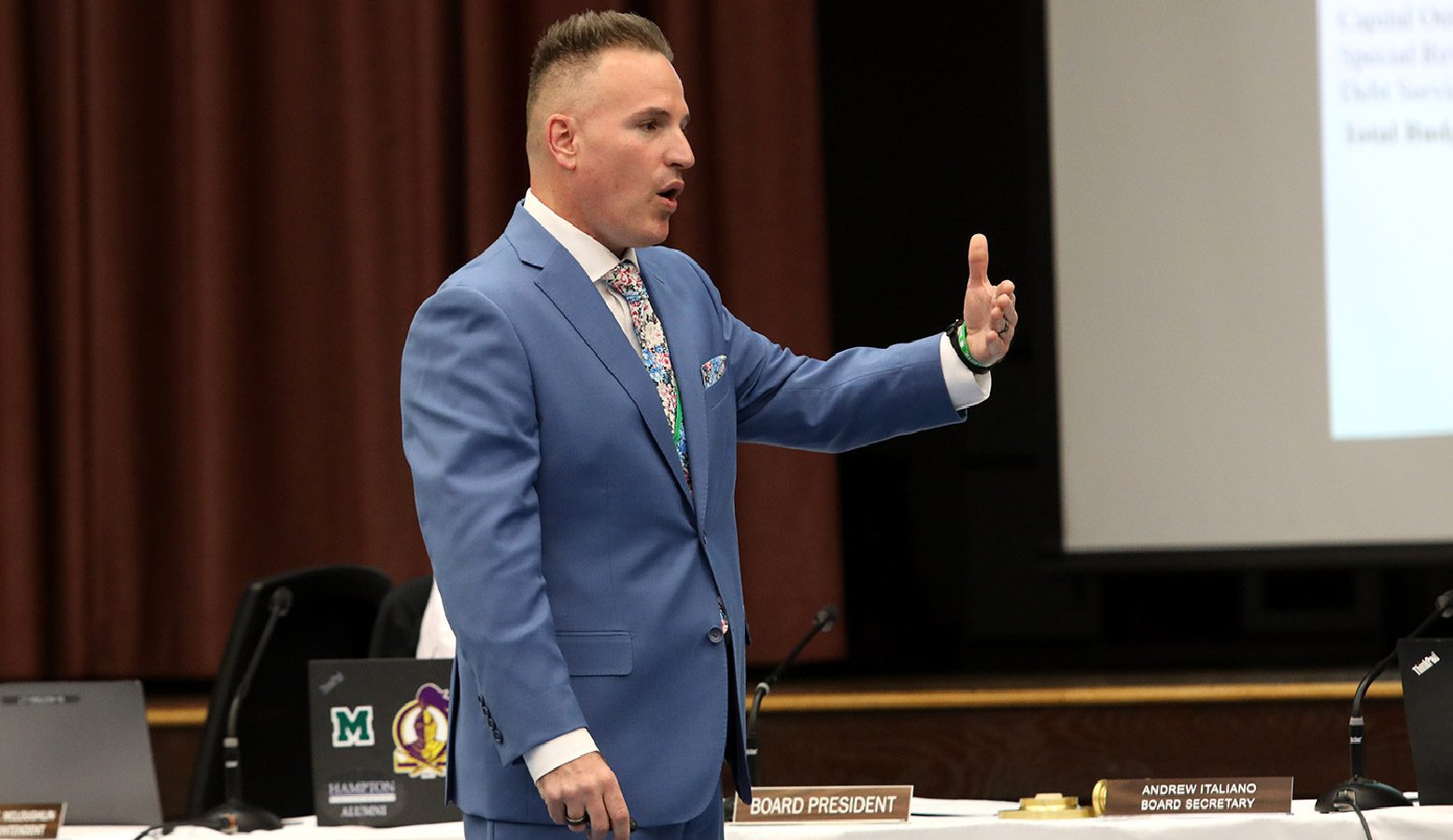
A particularly tense portion of the hearing unfolded during board questioning of Business Administrator Andrew Italiano over how staffing reductions were distributed within the budget. Board member Julius Nunez said the district’s compensation and benefits costs remained “a black box” without a clearer breakdown of how cuts affected teaching positions versus administrative roles, adding that “82% is just too big of an amount to not have a firm understanding” before a vote. Italiano responded that he had already provided an extensive position-control roster and said, “if you’re not comfortable with that, I can’t help you,” later adding, “You just might have to vote no for the budget if you don’t trust.” Another exchange grew sharper when Nunez added the board’s role was “governance, not spectators,” while Italiano countered that the administration had presented the staffing levels it believed were necessary and that the board was “not going to get the answer that you want tonight.”




Public comment brought additional tension to the hearing. One resident urged the board to reconsider the tax impact on households and, if necessary, “go back to the white board” to find a more sustainable approach. Another statement, read on behalf of a parent of two students with active Individualized Education Programs, urged the board to reject a petition seeking $14.6 million in cost containment, arguing that the proposal would fall disproportionately on special education services and support staff and would be neither legally nor financially sound.
Before the vote, three board members offered sharply different closing views that underscored the divide in the room. Member Francine Pfeffer said she supported the budget because it represented “a compromise between the resources we need for our students, for our schools, and between taxpayers,” while warning that deferred facilities work “may end up costing us more money in the future” and cautioning that continued staff reductions could drive class sizes higher and hurt instruction. Julius Nunez, in his first year on the board, called the budget “a balancing act,” said the administration had done “a great job” explaining major cost drivers, and argued that while enrollment is down, staffing is “flexing to match that” without going so far that it harms the student experience. But that supportive tone gave way to renewed criticism from Dr. Ting Wang, who said the board “shouldn’t be in this situation,” described the process as a problem of “transparency and accountability,” and said that after “multiple meetings, multiple emails,” the board was still being told that “asking two numbers is too much.” That frustration carried into the roll call, when she abstained, saying she could not vote yes because “some of my questions are not answered.”
The roll call vote went as follows:
Dr Wang – Abstain
Pfeffer – Yes
Spina – Yes
Franco-Herman – Yes
Worland – Yes
Harris – Yes
Nunez – Yes
Nargund – Abstain
Todd – Yes
Click here to view entire Board of Education meeting.
Photo Credit: Nicholas Mistretta/headlinenewsmontgomery.com