




From Vacancy to Vitality: A Practical Model for Community Space
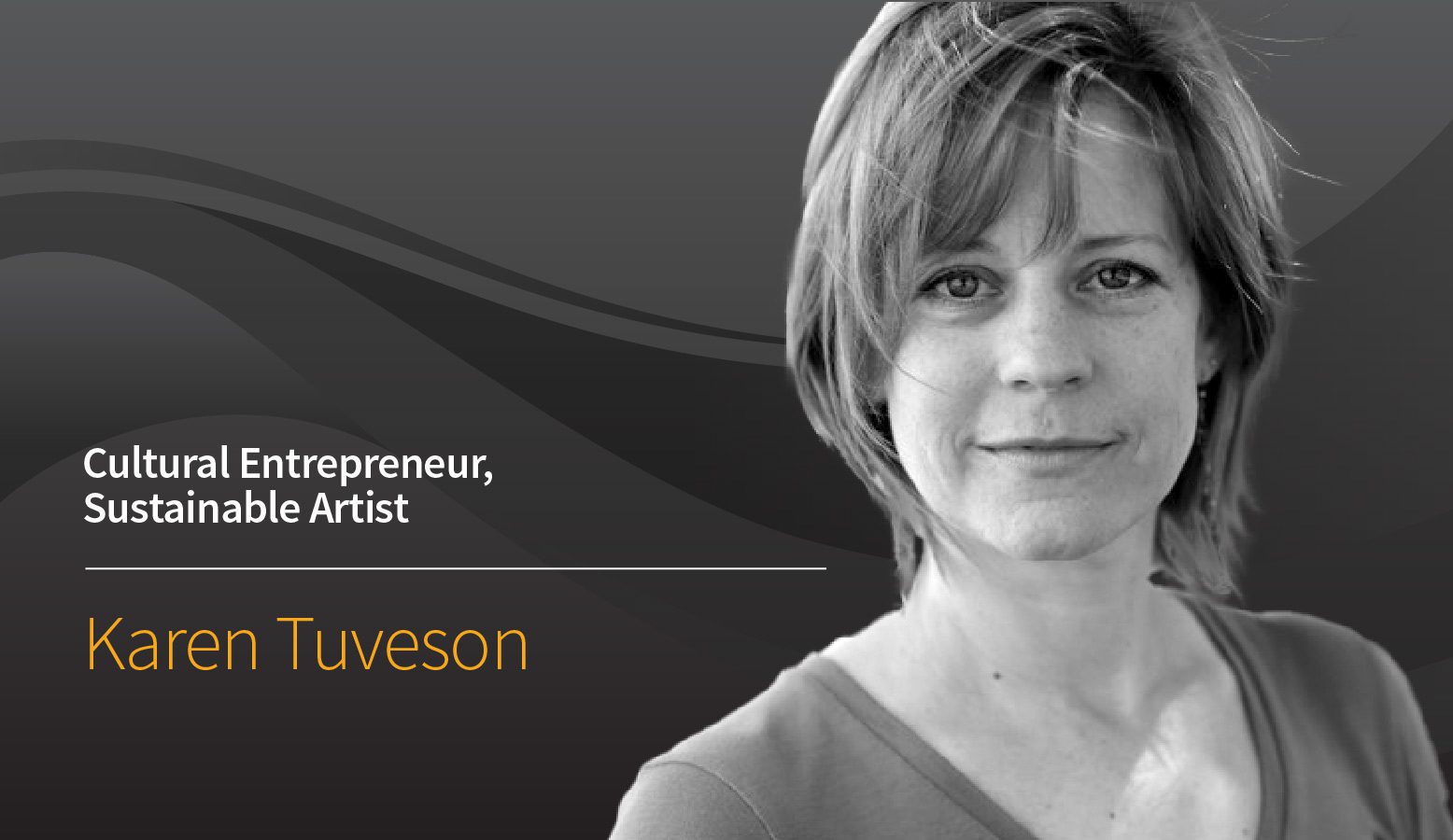
Karen Tuveson | Contributing Columnist
CREATIVE INFRASTRUCTURE: RETHINKING COMMUNITY DEVELOPMENT (PART 2)
A three-part look at how creative infrastructure strengthens local economies, supports public health, and activates underutilized commercial space.
Part 1 outlined the imbalance: development incentives continue to support new projects while community infrastructure—including the arts—and existing vacant space remain largely overlooked.
But across our region, there are clear, measurable examples of how underutilized commercial space can be reactivated to support economic activity, public health, and community engagement.
This is not theoretical, models already exist, and they’re working.
There is immediate potential to rethink how underutilized properties function, not as aging placeholders, but as long-term community assets. Utilizing existing space also reduces the environmental impact associated with new construction, while making better use of what already exists.
What if even a small percentage of these spaces were intentionally reimagined to support creative work, public engagement, and community well-being?
A Model Already Taking Shape
This approach has already been tested, and repeated, locally.
Through the Montgomery Arts Council, eight public art events were organized over four years using vacant commercial spaces. Each brought together between 20 and 40 regional artists, drawing between 200 to 800 visitors from across New Jersey and Pennsylvania.
These were short-term uses, typically two to three days, but the impact was measurable and consistent. Art sales ranged from $8,000 to $25,000 per event, generating direct economic activity within spaces that had otherwise remained idle.
A one-day, ticketed holiday event, executed in partnership with the local business association, expanded this model even further. More than 40 regional makers participated alongside local businesses, brewers, live performances, and food vendors. The event drew over 800 paying attendees, creating a high-energy, community-centered marketplace where many artisans sold the majority of their inventory. Many have since continued to seek similar opportunities locally.
In another case, a three-week open studio pilot was created within a vacant commercial space. Three artists worked on-site, sold artwork, and collectively added nearly 100 new contacts to their mailing lists. Neighboring businesses reported a measurable increase in foot traffic during that period.
These are not isolated successes. They reflect a repeatable pattern, one built through direct experience working with artists, property owners, and local partners.
When space is used with intention, it generates both economic activity and community vitality.
And importantly, this work is being done—without formal systems in place to support or scale it. Despite clear demand and proven results, there are no consistent, year-round spaces available to sustain it.



The Disconnect Between Space, Incentives, and Need
As development deals continue, demand for creative and community space grows, and be consistently overlooked.
Nearly 100 artists have reached out directly in search of affordable, local studio space. At the same time, hundreds of thousands of square feet of commercial property are sitting vacant.
The need exists. The space exists.
What’s missing is structure.
Incentives are largely directed toward new development. Tax abatements and financial agreements are used to encourage building and expansion, without parallel consideration for community benefit.
There are no comparable mechanisms supporting the use of existing vacant space for community benefit. At the same time, leadership continues to prioritize science and technology as drivers of innovation. That focus has value, but it operates within a broader ecosystem that depends on idea generation, experimentation, and cross-disciplinary thinking.
Those conditions require environments where creative work is actively taking place. Without those environments, the system is incomplete.
The result is not just inefficient—it carries economic, environmental, and community consequences. New construction demands materials, energy, and infrastructure, while viable space sits idle.
A more balanced approach recognizes that these systems are interconnected.
If incentives shape development outcomes, they can also shape how existing space is used—strengthening both economic activity and long-term community resilience.

Building Beyond Pop-Ups
Short-term use demonstrates what’s possible. Long-term infrastructure sustains it.
Through local nonprofit Catalytic Arts, a broader model is already underway. With support from a county grant and local fundraising, a public art initiative has been launched to connect artists with farms and highlight regional agritourism.
In its first year, six artists were commissioned to create site-specific work in collaboration with farmers and landowners. Installations were completed through partnerships with local businesses, an engaged volunteer network, and sustained media outreach.
This establishes a five-year initiative, designed to expand with approximately six new installations annually. Supporting infrastructure, including signage and a dedicated website, is in development to ensure the program scales effectively and remains accessible over time.
Together, these efforts have built a growing network of nearly 400 regional artists.
This is what early-stage creative infrastructure looks like in practice.
Arts, Health, and Community Well-Being
Research in neuroscience and public health continues to demonstrate that engagement with the arts reduces stress, improves cognitive function, and strengthens social connection.
Healthcare systems are increasingly integrating arts-based approaches into patient care and recovery. Communities that invest in access to creative experiences are investing not only in culture, but in public health.
When existing spaces are used for creative work, the benefits extend across multiple dimensions—economic, environmental, and human.



Innovation Requires Creative Infrastructure
Local development conversations continue to emphasize investment in science and technology as primary drivers of growth.
That focus is valid, but incomplete.
Innovation depends on creative environments that support exploration, experimentation, and the exchange of ideas. These conditions do not emerge in isolation—and they are not separate from the arts.
Yet spaces that support this work—studios, shared creative environments, and community-based arts spaces—remain absent from local development strategy.
A strategy that promotes innovation while excluding the arts from its infrastructure undermines the very outcomes it aims to achieve.




Where the System Breaks Down
If innovation is being prioritized, the systems that support creative thinking need to be part of that strategy.
Right now they are not.
Despite clear outcomes and growing demand, there is little structural support for expanding this work.
Leadership has expressed interest in supporting the arts, but interest without policy produces no measurable change.
As large-scale projects move forward, including the redevelopment of a former pharmaceutical campus and a major commercial site positioned as an innovation hub, there is no requirement or framework to include affordable space for nonprofits or community-based programs.
These are rare opportunities to shape long-term community benefit, yet that potential remains largely untapped. Once missed, they are also difficult to recover.
At the same time, artists and organizers are expected to continue to build and sustain initiatives independently, without formal support or resources, while municipalities benefit from the visibility and engagement they generate.
That imbalance is not just unfair—is it unsustainable.
Developers operate within financial constraints. They are not structured to offer space below market rate at scale.
Which leaves a gap that only leadership can address.
If the arts are expected to contribute to economic vitality, tourism, and community identity, they must be treated as infrastructure, not as an unpaid add-on.
A Practical Path Forward
The solution is straightforward:
- Tie development incentives to community benefit, including dedicated creative space
- Establish mechanisms encouraging the use of existing vacant properties for community programming
- Facilitate connections between property owners and vetted nonprofits and arts organizations
- Support pilot programs that demonstrate scalable models
- Integrate creative infrastructure into long-term economic planning These steps require structure, not reinvention. They require follow-through.

The Opportunity Ahead
The work has already begun.
Vacant spaces have been used. The creative community is organized. Demand is clear. Early models are in place and ready to expand.
What remains is not possibility, it’s decision-making. Whether to continue treating these efforts as temporary, or to recognize them as essential infrastructure.
Empty space is not the problem. Inaction is.
When development incentives are prioritized, existing space is ignored, and the arts are excluded from economic infrastructure, the result is an imbalanced system—one that fails economically, strains environmental resources, and weakens the health of the community it’s meant to serve.
Photo Credit: Author supplied