




BOE Presents Tentative 2026-27 Budget Centered on Healthcare Costs, Enrollment Decline and Tax Impact; Budget Would Increase Average Tax Bill by $620
Nicholas Mistretta
At its March 24 meeting, the Montgomery Township Board of Education received the district’s tentative 2026-27 budget presentation from Superintendent Mary McLoughlin and Business Administrator Andrew Italiano, who described the proposal as an effort to preserve current instructional standards while managing rising employee healthcare costs, a projected enrollment decline, and a late reduction in state aid.
McLoughlin opened the presentation by tying the budget to the district’s strategic plan, citing three goals: student experience and achievement; communication, community engagement and outreach; and climate and culture, including social-emotional learning, health and wellness, and resilience. Italiano then walked the board through the development process, saying budget planning began in the fall, with requests gathered from principals, directors and supervisors before being revised during winter budget discussions. He said the board’s Finance and Facilities Committee received its first preview March 10, and that the district received state aid figures March 12, later than usual because of the change in gubernatorial administration. According to Italiano, state aid came in 3 percent lower than expected, a cut of about $248,000.
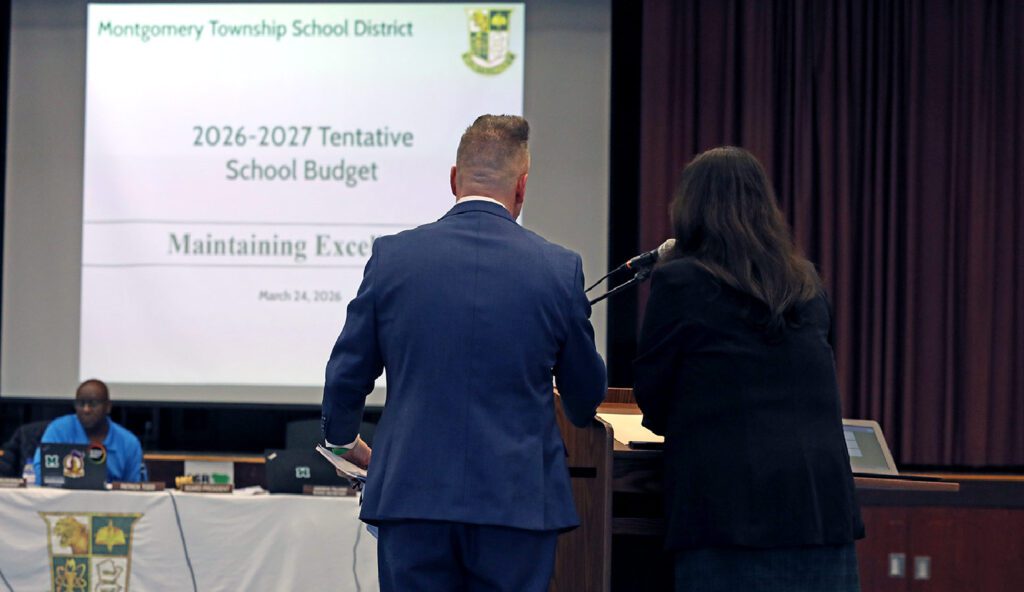

By law, Italiano said, the district had to adopt a tentative budget in time to submit it to the executive county superintendent by March 27. He said the budget will next move through county review before returning to the board for a public hearing and final adoption on April 28, with the possibility of revisions before then if needed.
A central theme of the presentation was healthcare. Italiano said the tentative budget is built around a proposed healthcare waiver and the use of an expiring banked cap, in addition to the standard 2 percent tax levy increase. He explained that state rules allow districts to seek additional tax authority when healthcare costs rise more than 2 percent above the prior year’s level. Without that waiver, he said, the district would still have to pay the higher healthcare bill, but the money would have to come from programs, staffing and instruction.
Italiano described the overall recommended budget as increasing by 5 percent year over year. With the healthcare waiver and expiring bank cap included, he said the total school tax increase would be 6.37 percent. He also said the district’s debt service is declining, reducing that portion of the tax burden by 17 percent, while state aid is down 3 percent.



On the spending side, Italiano said salaries and benefits account for 82.2 percent of the budget, which he said is in line with typical New Jersey school budgets. He said roughly 26 percent of the budget goes to regular program instruction, while another 25 to 26 percent goes to employee healthcare obligations alone. He told the board the district is in an invite-only private health plan that was shopped against other private options and that, for the upcoming year, the current plan still produced the best available rate. He added that district officials are working with their health insurance broker on possible future cost-control measures and said the Operations, Audit and Finance Committee is expected to hear more in May.
Italiano also addressed enrollment, saying the district is budgeting for a 2 percent decrease, from an October 15, 2025 count of 4,394 students to a projected 4,310 next year. He said a 2024 demographic study had forecast more students, including growth tied to new housing, but those students had not yet materialized. Basing the budget on higher enrollment and state aid that may not arrive, he said, would be irresponsible.



To align staffing with that projection, Italiano said the budget assumes about $1.44 million in position reductions, which he described as roughly 2 percent of staff and generally in line with the enrollment trend. He said administrators and principals reviewed class sections, schedules and enrollment data to make what he called targeted cuts. He also said the district reduced or postponed other spending, including facilities projects, supply lines and professional development, in an effort to protect classroom instruction and student programming. Among the deferred facilities items he cited were replacement of lower middle school bleachers, paving and sidewalk work, and other building upgrades.
Italiano said district officials reviewed more than 500 supply lines and trimmed most by about 20 percent, except for special services. He said those cuts yielded about $400,000, but warned that supplies are too small a share of the budget to solve a multi-million-dollar gap on their own. He also said $110,000 was cut from professional development, with the district shifting away from travel-based training toward more local and online options.
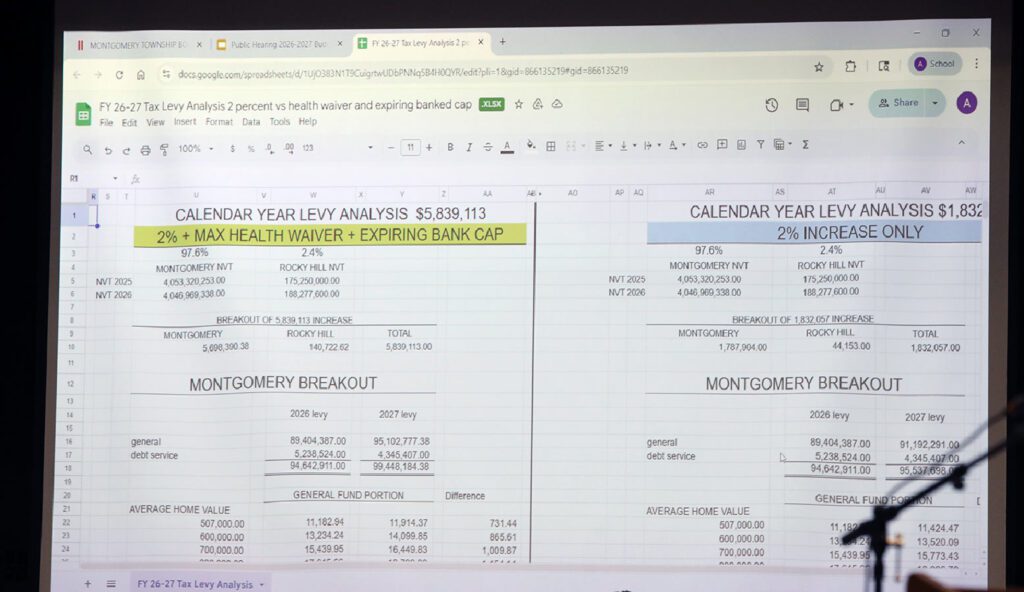
Among the budget’s funding components, Italiano identified $3.1 million from the healthcare adjustment, $1.8 million from the 2 percent tax levy increase, and $875,000 from the expiring banked cap. He also highlighted two Regular Operating District, or ROD, capital projects totaling $3.7 million, with the district responsible for $2.267 million and the state covering $1.51 million.
The presentation concluded with the estimated local tax impact. Italiano said that under a standard 2 percent school tax increase, the district’s average assessed home would see an increase of about $130.68 for the year. Under the tentative budget proposal using the healthcare waiver and expiring bank cap, he said that increase would rise to about $620, or roughly $490 more for the year. He framed that as “$490 for $4 million worth of funding,” arguing that without that revenue the district would need to make another $4 million in cuts on top of those already proposed. He told the board that such cuts would likely mean approximately 40 additional teaching positions, larger class sizes, reduced instruction, and broader effects on programs including music and sports. For Rocky Hill residents, he said school taxes would still decline because of older debt obligations tied to the prior Montgomery-Rocky Hill arrangement.
Board discussion that followed focused heavily on healthcare calculations, staff counts and transparency in reporting. Italiano said the district’s employee healthcare contributions total about $3.312 million, and he explained that those employee contributions are backed out when the district calculates its net healthcare obligation for budget purposes. He also clarified that “employee benefits” and “health benefits” are not synonymous, with healthcare representing only one component of the larger employee benefits category.

Questions were also raised about staff reductions and how personnel counts are reported in different documents. Kelly Mattis, Assistant Superintendent of Human Resources, told the board that different reports capture staffing at different times of year and use different definitions — for example, some count all employees on the teachers’ salary guide, while others count only classroom teachers. That, she said, can make year-to-year comparisons look inconsistent unless the categories are carefully aligned.
Board members also commented on enrollment trends, the importance of maintaining academic quality and extracurricular offerings, and public confusion over assessed home value versus market sale price. One board member said preserving the district’s current level of performance may require a difficult tax decision, while another urged continued attention to student retention and clearer staffing comparisons. Italiano and McLoughlin maintained that the proposal was intended to preserve instructional levels and program quality while managing costs that they said are affecting districts across New Jersey.
The tentative budget now moves to county review ahead of the board’s scheduled public hearing and final adoption in late April.
Photo Credit: Nicholas Mistretta/headlinenewsmontgomery.com