




Township Outlines Early Plan to Preserve 395 Acres of Former State Institutional Lands on Burnt Hill Road
Nicholas Mistretta
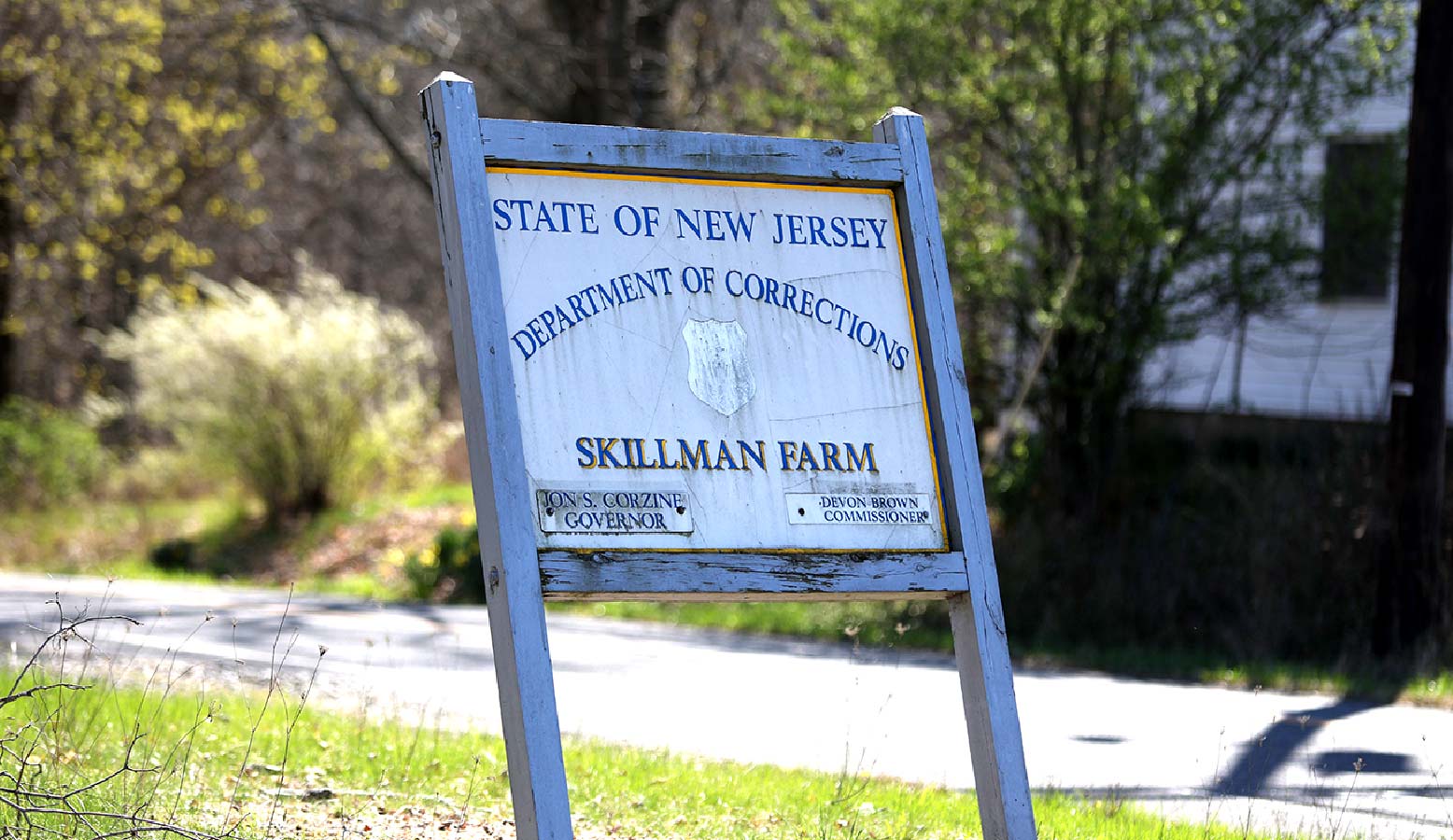
MONTGOMERY TOWNSHIP — Montgomery Township officials on March 5 publicly outlined an early-stage effort to acquire and preserve approximately 395 acres of state-owned land off Burnt Hill Road, property that once formed part of the larger North Princeton Developmental Center (NPDC) and that township leaders described as one of the most significant open space opportunities in decades.
During a presentation to the Township Committee, Open Space and Stewardship Director Lauren Wasilauski said the proposed acquisition would be the largest she has worked on in her 20 years with the township. She emphasized, however, that the project remains in its early due-diligence and planning stages.
A rare opportunity on former state lands
Wasilauski said the state of New Jersey, through the Department of Corrections, has emerged as a potentially willing seller — a key threshold in any preservation effort.
She explained that township acquisitions can only proceed with landowner interest and that Montgomery is currently in the phase of committee review and early fact-gathering, including examination of deeds, easements and other property records.
The land in question consists of two major parcels — one on each side of the former state institutional complex — totaling roughly 395 acres. Both parcels were once part of a much larger state-owned holding of more than 1,000 acres associated with the North Princeton Developmental Center, also referred to historically as Skillman Village.
Over time, pieces of that larger property were broken up and repurposed, including land now occupied by Montgomery High School, Skillman Park, and several privately owned preserved farms along Skillman Road. Wasilauski described the two parcels now under consideration as among the final major remaining state-owned tracts tied to the former complex.
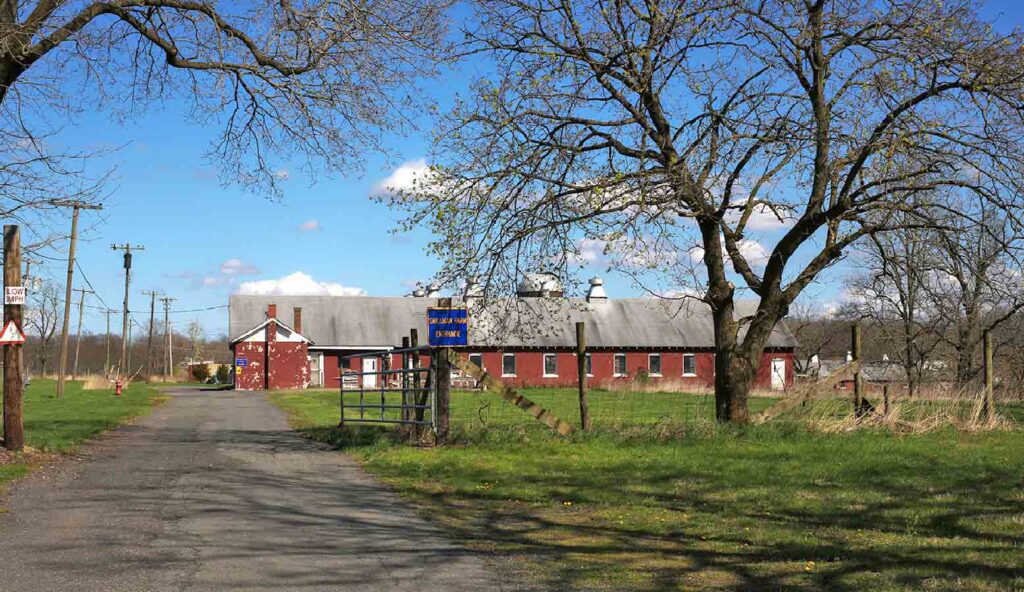



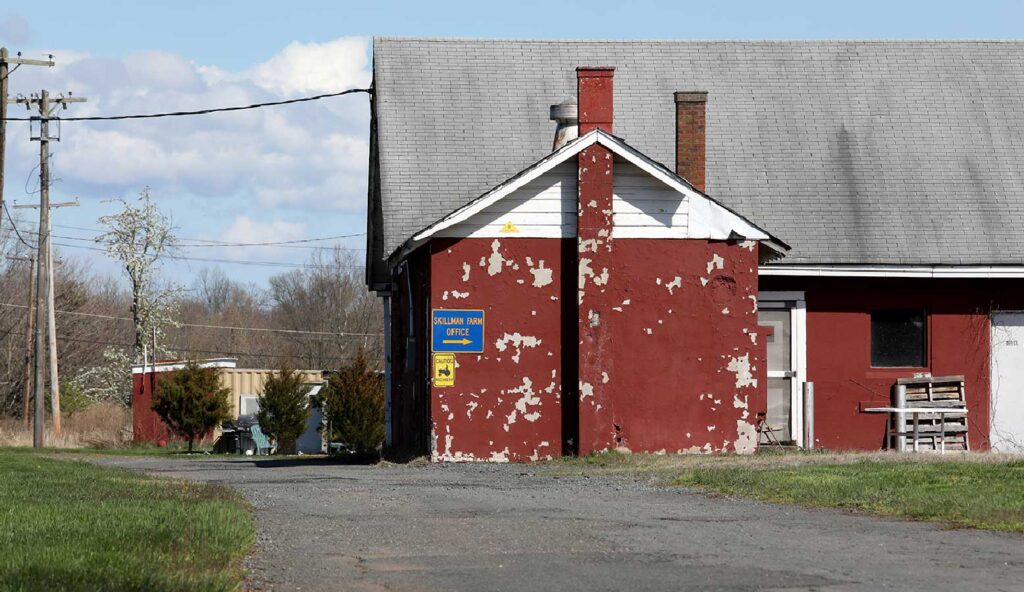
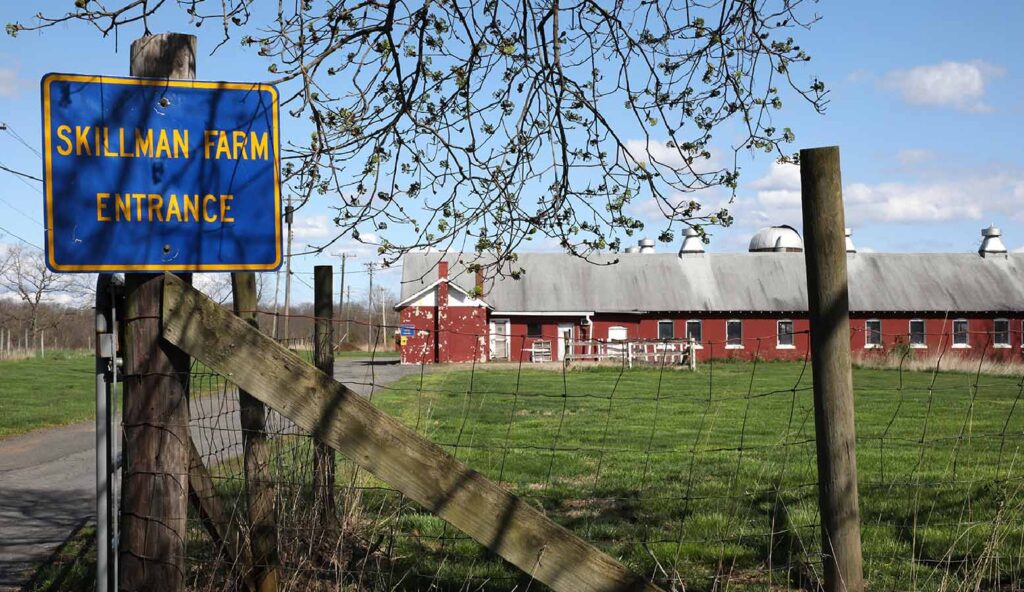
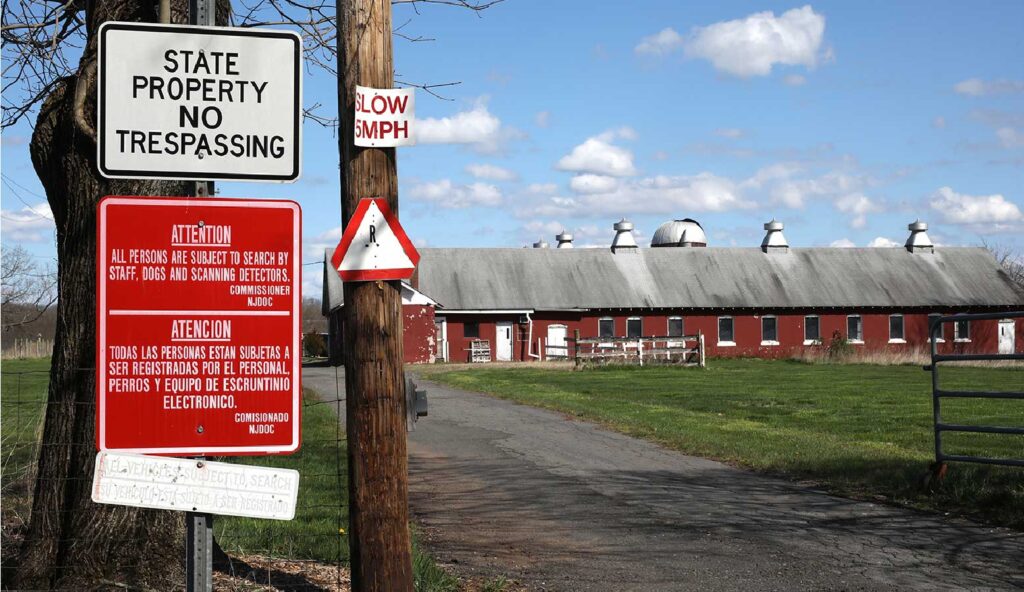
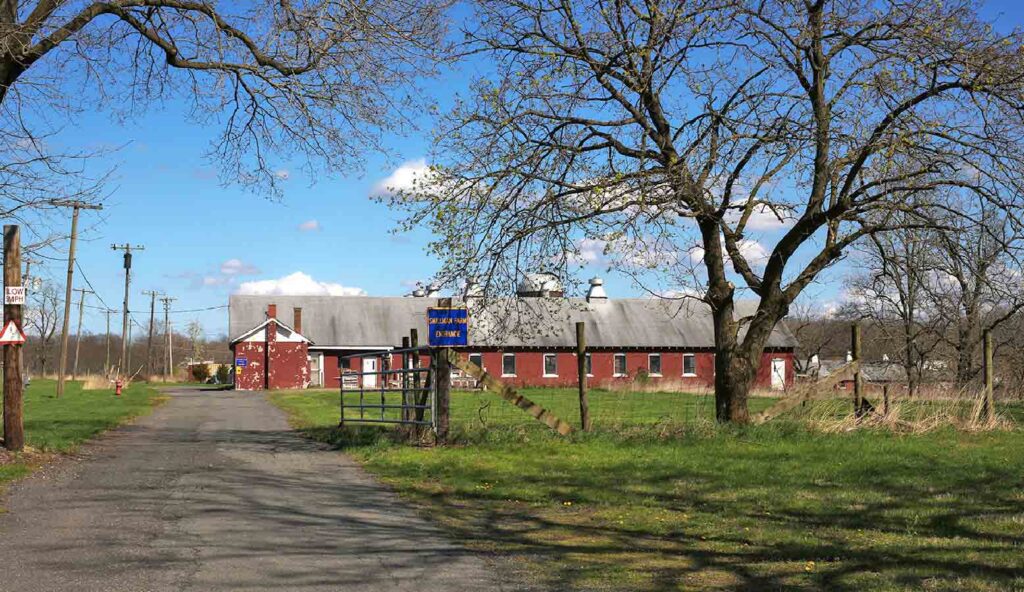
One of those tracts, on the eastern side, includes the former Brookview Dairy, where inmates nearing parole and lower-level offenders once worked on a dairy operation that produced milk, cheese and yogurt for prisons across the state. Wasilauski said that operation ceased around 2009, and the property has remained largely vacant since, aside from a county agreement allowing some equipment storage for park maintenance.
Two parcels, one corridor
According to Wasilauski, the two parcels under consideration break down as follows:
- Approximately 188 acres forming a “C-shape” around Montgomery High School, with the Rock Brook stream corridor along its southern edge.
- Approximately 207 acres on Burnt Hill Road, containing the township’s wastewater treatment plant as an inholding and including the confluence of Rock Brook and Bedens Brook.
She also noted the presence of a cemetery on the Burnt Hill Road side, one of multiple burial sites connected to the former state institutional property.
Green Acres would be key funding partner
Wasilauski said the township’s primary outside funding source for acquisitions continues to be the state’s Green Acres Program, which provides a 50 percent cost-share grant for eligible acquisitions as well as reimbursement for technical work such as surveys and environmental assessments.
Because Montgomery has an open space tax and a current open space master plan, the township qualifies for planning incentive funding through Green Acres, she said.
The program’s involvement, however, also comes with extensive documentation requirements. Wasilauski described the current phase as centered on a detailed “pre-appraisal checklist,” a multi-page submission designed to standardize what appraisers and Green Acres reviewers receive before formal valuations begin.
The township must identify the exact acquisition area, provide mapping and photographs, disclose existing easements, and identify any areas that may need to be excluded from Green Acres restrictions because of non-park uses.
Once that checklist is accepted, Green Acres can authorize the township to hire appraisers from the program’s approved list.
Proposed “exception areas” draw attention
A major focus of the March 5 discussion was a conceptual map showing several potential exception areas on the Burnt Hill Road parcel — portions of land that would be excluded from Green Acres participation and therefore would not be permanently restricted for open space recreation use.
Wasilauski stressed that no final decisions have been made about future development on those areas. Instead, she said, identifying them now could preserve future flexibility and avoid costly delays later.
Among the conceptual exception areas discussed were:
- A roughly 33-acre area around the existing wastewater treatment plant and utility easements, reserved for future operational needs.
- A roughly 25-acre area north of the sewer plant that could potentially accommodate a future public works facility.
- A roughly 15-acre area near Burnt Hill Road identified conceptually for a possible future recreation center.
Wasilauski said Green Acres rules would not allow state funding participation for uses such as sewer infrastructure, road-related improvements, or indoor recreation facilities. If the township were to decide later to carve out such areas after appraisals were completed, she said, the process would likely have to restart from the beginning.
“So if we can identify these things now, it could save us a little money and time in the future,” she said.
She added that the proposed areas are not fixed and could be reduced or potentially never used, but carving them out now would leave options open if township needs evolve.



Open Space Committee urges caution
The proposed exception areas drew pushback during public comment from Clem Fiori of the Open Space Committee, who said members were surprised to see what he described as an advanced conceptual commitment to non-open-space uses, particularly on land the committee has long viewed as central to the Rock Brook corridor.
Fiori said the committee has been working to incorporate statewide habitat connectivity planning — including the Connecting Habitat Across New Jersey (CHANJ) model — into township open space thinking, and sees the Rock Brook corridor as one of Montgomery’s most environmentally significant links.
He said the Burnt Hill Road tract offers a rare opportunity to preserve a continuous greenway connection and argued that introducing uses such as a public works facility or recreation center on former pastureland would conflict with that goal, as well as with farmland preservation, traffic concerns near Skillman Park, and possible future trail linkages.
“We’ve been looking at the Rock Brook stream corridor as a very special part of our master planning for open space,” Fiori said.
He urged additional discussion with the Open Space Committee as the process moves forward.

Residents ask about trail links, historic use and timing
Resident Reed Chapman, who described the nearly 400 acres as the “holy grail” of Montgomery’s open space efforts, also urged transparency and community engagement as the acquisition moves forward.
Chapman supported the township’s interest in acquiring both parcels together, but raised questions about historic preservation, potential trail connections, visual screening near the container storage area on Burnt Hill Road, and whether some concepts — such as a YMCA or other facility — might be better located elsewhere.
He also asked whether the township had considered other nearby parcels and whether acquiring the property could have any implications for affordable housing planning.
Wasilauski said she welcomed further discussion on the site’s history and long-term possibilities.
Former Mayor Devra Keenan also raised concerns about the financial structure of the acquisition, noting that the state has owned the property tax-free for decades and questioning whether donation rather than purchase remained a possibility. Township officials responded that multiple paths are being explored in parallel, including discussions with state representatives.
Keenan also noted the land remains protected by legislation and suggested the township has time to study the issue carefully.

Township says no decisions are final
Township officials repeatedly emphasized that the concepts shown were preliminary and that no commitment has been made to build any of the proposed facilities. The purpose of the current exercise, they said, is to preserve flexibility while the township decides whether and how to proceed with the acquisition.
Wasilauski said the next steps include finalizing the proposed exception-area configuration, submitting the pre-appraisal checklist to Green Acres, and continuing coordination with the State Historic Preservation Office, which still requires review because of the property’s history as part of the former institutional campus.
Mayor Neena Singh and other committee members said the township has worked for years to get the state to the table and that acquiring the land before it becomes available for some other disposition remains a priority.
“I think our consideration also has to be we are so close to acquiring this property,” Singh said. “It’s better in our hands, I believe, than the state’s hands.”
For now, the proposal remains conceptual — but township officials made clear that preserving these former state lands is being treated as one of Montgomery’s most consequential open space opportunities in recent memory.
Photo Credit: Nicholas Mistretta/headlinenewsmontgomery.com